


Performance Appraisals
Hi guys, last week I wrote a post that was quite polemic and got a lot of attention. I wrote about an elimination of managers in our organisations performing an usual old management style. The old management style is obsolete and we need to think about new ways to help our colleagues and employees. The previous post can be found here.
This week I want to continue this discussion and explain why we should abolish performance appraisals, this will be the first post out of a series of three posts that I will write on this topic. I have been reading several books about the topic and I wanted to leave some ideas that I collected from the book: ““Abolishing Performance Appraisals””
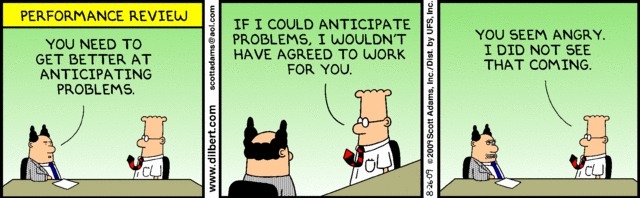
Our world is changing, our mode of working is shifting to empowerment, collaboration and teams. This means that each company will need to shift from managing people to help people managing themselves and the business. Many companies think that helping individuals to get better is the recipe for the organisation to improve as a whole but often they fail. Substantial organisation improvement can only be achieved by improving the whole as a complex system. Naturally, individual improvements efforts are beneficial and often necessary but too much emphasis is placed here.
What is “Performance Appraisals”?
Tom Coens and Mary Jenkins define Performance Review in their book as: “The process of evaluating or judging the way in which someone is functioning”. It is even more interesting as in most cases managers do not have any contact with our daily work. So can you explain how they can actually evaluate or judge our work? If you know how to explain, please contact me, I am eager to learn :) :)
I think I am not alone thinking about this issue. A survey performed by the Society for Human Resources management found that 90% of performance review systems were not successful. So why do we hang onto a process that does not work? Because people and organisations think that no performance appraisals means no feedback, no special help on career development and performance issues. They think their salary increases and their career development will be decided arbitrary without any input. Another important part is that people think they need performance appraisals to tell them where they stand. They believe that an evaluative system will recognise it and reward them.
Why performance appraisals fail?
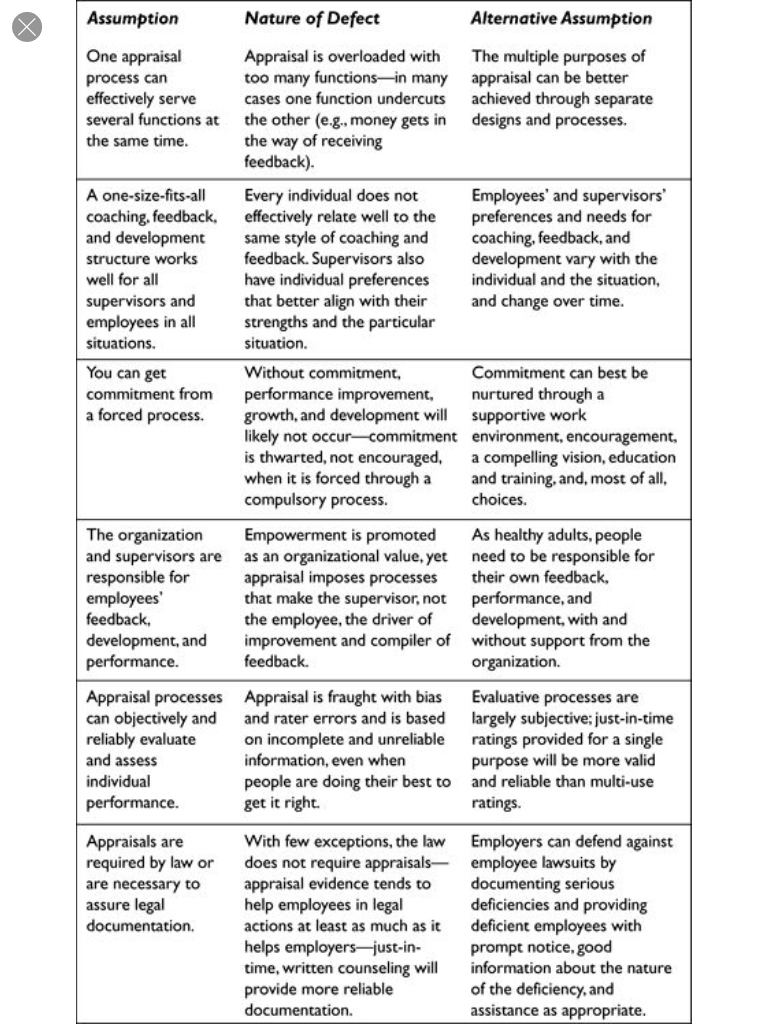
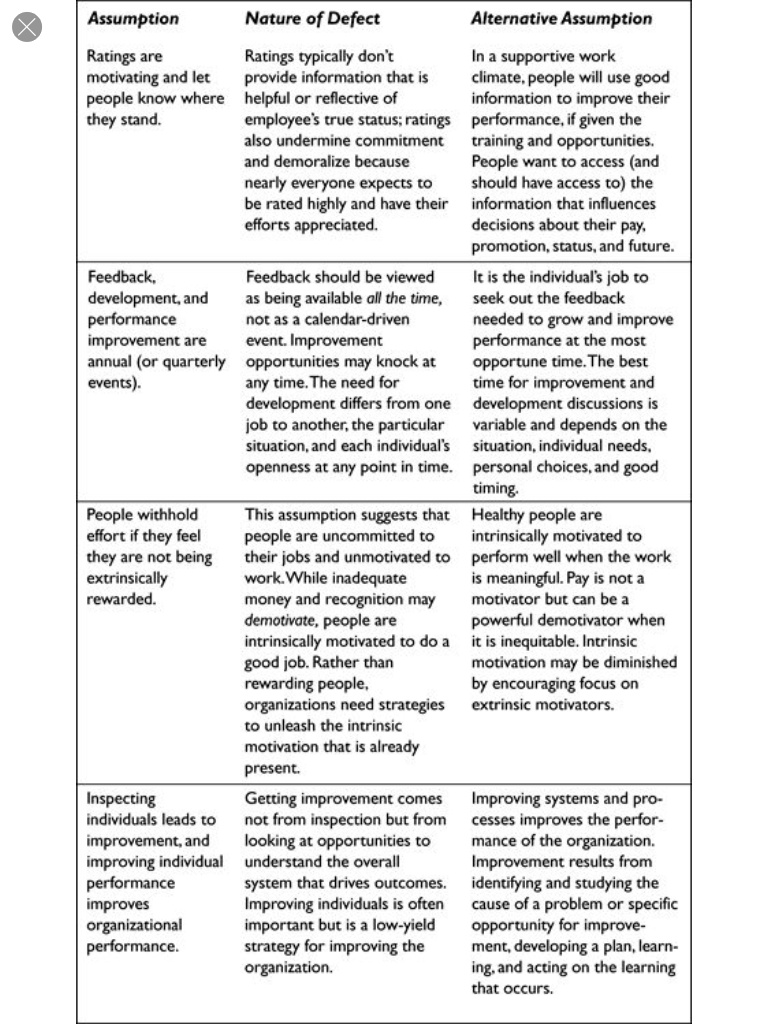
The problem with performance appraisals is beneath the surface in the form of underlying assumptions, i.e, the basic premises and beliefs upon which the performance appraisals are built. Below you can find two tables from the same book where the authors list several assumptions and identify the problems with the same assumptions.
On the next post I will explain the clash of performance appraisals with our new way of thinking in modern companies. To see the next post press here.
This blog post is part of my new book that I am writing: Get Rid of Performance Appraisals that you can find here.
I would love to get a star rating for this post:



Reblogged this on Sutoprise Avenue, A SutoCom Source.
Getting rid of managers? getting rid of performance reviews? I understand your sentiments and agree with the underlying message that appears to be “nobody sets out to do a bad job” All that is fine while things are working well, its when they don’t that we need managers. Managers should, however, be ensuring their people follow the agreed best way of working, sadly too many managers are busy doing politics to care and they then use performance reviews badly.
Performance review can be used well, if, and only if, the manager know what is happening, what should be happening and actually manages, before during and after the reviews.
Reblogged this on News & Notes on LEADERSHIP for LEARNING.
Thanks for sharing. I’d agree, ‘Performance Reviews’ do not cut the mustard in organisations geared up for quick feedback loops where performance should be measured by throughput of the team and not the individual and regular retrospectives are the time to deal with anything blocking or hindering the team performance. As a manager (dirty word eh?) it’s up to me to facilitate these regular feedback loops and make sure different personalities (some extrovert, some introvert) work together for the good of the team and are comfortable providing feedback to one another.
6 or 12 month ‘Performance’ reviews do not work in this environment because things like retrospectives and code reviews make them redundant. That said, I still like to have 6 monthly reviews with each team member because it’s a way for me to discuss things in person, for me to understand a bit more about them and to understand if there is anything (work or personal) that is troubling them and to work it through. It’s also a good opportunity for me to get a feel for what they want from the bigger picture and to try to help steer their progression within the company with that in mind. This aids staff retention.
Pingback: A true Scrum team recruits its own members. - Agile Coaching Academy
Link posted to agileaustin-notify