Knowledge Transfer
now browsing by category
Nightmare - Central teams consisting of coaches
Some weeks ago I engaged in a nice conversation with Stephen Parry and Tonianne DeMaria Barry about coaches and how they could harm the organization.
They came up with an interesting perspective. In their opinion, central teams consisting of coaches are quite harmful for the organization.

Stephen defends they (coaches) will perpetuate themselves making everyone dependent on them.

This has a huge impact on the organization. According to him, this creates a clear statement that coaches are the only ones responsible for improvement. Other people outside of a team will not make any efforts to improve anything because it is simply not their job. This will create a culture where continuous improvement job belongs just to a few pre-selected people who work in that particular team.
Honestly, when I saw these statements I was a bit confused. I am a coach myself and I belonged to one of such teams in past. If I look back, I believe I am highly respected by everyone whom I worked with, however, I understand the point of Stephen´s and Tonianna´s view. Having central coaches, team members have someone to take care of the continuous improvement. Therefore, they do not care much, they know they have coaches to help them and at the end of the day it is not their job. So why to bother?
Another thing I realised is that if you belong to a central group, you cannot focus on one single team/organization. There is simply too much stuff to do and at the end you cannot help everyone. If you belong to a vertical organization, you can help that organization or focus on one or two teams. You can show everyone that continuous improvement is a job for everyone not just for coaches.
And let´s be honest… We as coaches, we always teach and preach to everyone that we need cross functional teams. So why to create a central team only with coaches? What sense does it make?
Create a Knowledge Transfer Culture or you will die!!!
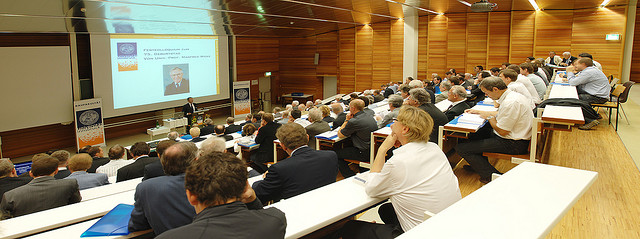
http://www.flickr.com/photos/uniinnsbruck/
Hi guys, during last two weeks I had an opportunity to catch up with a friend who works as Agile Coach. During last summer, his company had serious issues with knowledge transfer that almost forced them to close doors. In this blog, I will explain why is it so important to have a culture that supports knowledge transfer on a daily basis.
This company is a startup and like all startups, fast delivery is mandatory in order to survive. Because of this constraint, the company had a rule that team members could not take holidays at the same time. They would need to organise their vacations in order to have 2/3 of the team working. Until last summer, each person within the team was responsible for different tasks, there weren’t two persons responsible for a common task.
Summer came and during 4 sprints there was always someone on vacations. What happened was something predictable, the team did not deliver almost anything during those 4 sprints (2 months) because there was always someone missing with needed knowledge to deliver parts of the stories. This missing knowledge within the team was almost critical to the company.
Until last summer, this team never cared with knowledge transfer. Now, my friend told me that nowadays the company invests a lot of time in order to not suffer from the same problem again. I am pretty sure many other companies will not be so lucky if something like this happens to them. More and more it is crucial for companies to create a culture that promotes knowledge transfer within their organisation.
If you were/are in the same situation as my friend and you are looking for ways to transfer knowledge you can get a lot of ideas here.
Sharing knowledge within your organization
 Hi guys, for some time I have been thinking about writing a series of blogs about knowledge shared within an organisation. As an Agile Coach, one of my roles is to help companies define a strategy to support a knowledge sharing. In this blog post, I put together several different posts about knowledge sharing techniques.
Part of the posts include small introductions of some techniques. Though it is a short post yet I believe it is useful for you guys :). Many people talk about Community of Practices(CoPs), in my opinion CoPs is a way to put people together discussing about a topic that interests all participants. Below there are several ideas you can use in your own CoP, use them and share the results with me.
- Study Groups
- Coding Dojo Intro
- Coaching Dojo
- Small Intro Pair Programming
- Enable Pair programming Rotation
- Ping Pong Programming
 D5 Creation